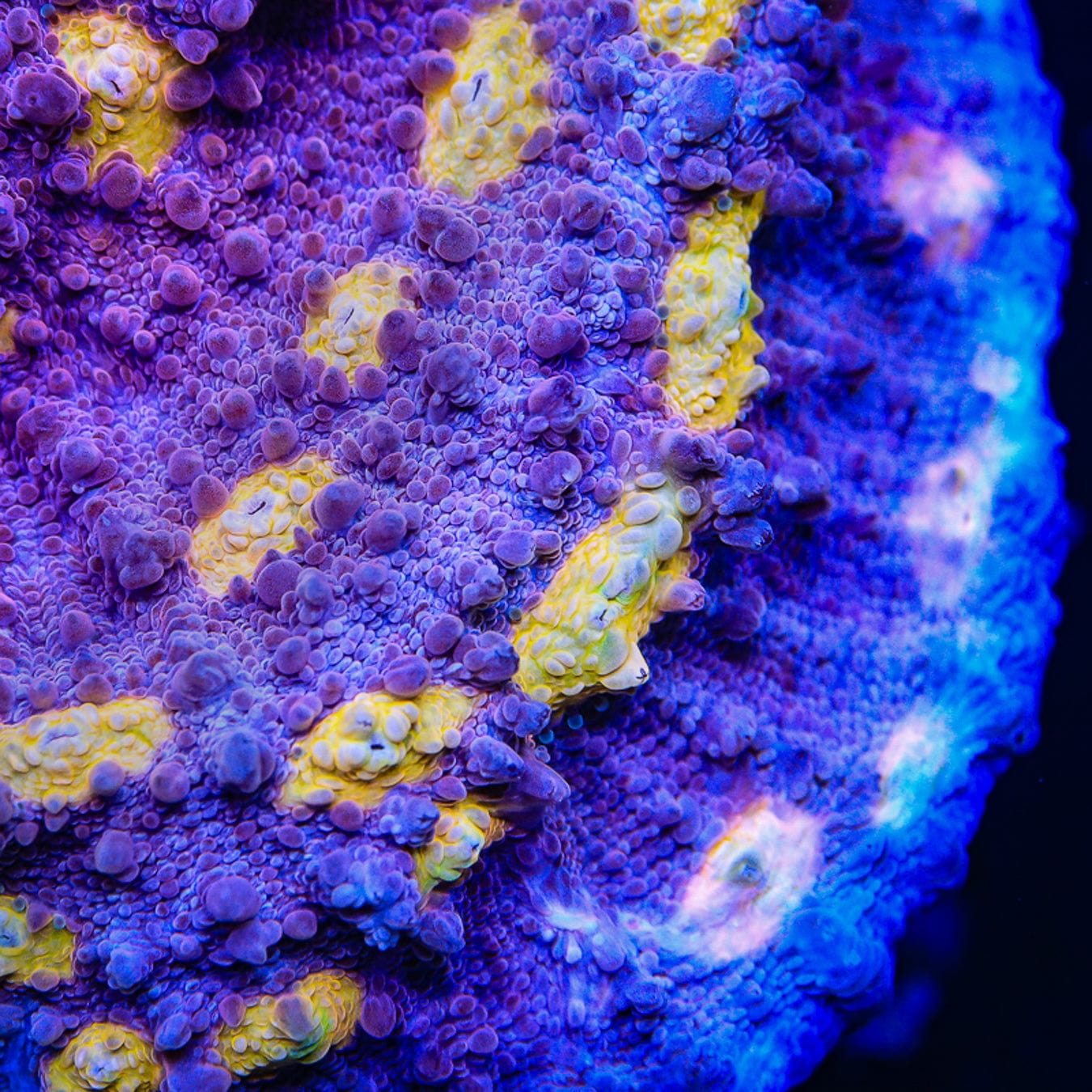
ORA Easter Egg Chalice Coral
ORA Easter Egg Chalice Coral
Aquacultured Chalice Coral
Chalice coral is a group of LPS (large polyp stony) corals prized for vivid color and intricate patterns. Genera such as Echinophyllia and Oxypora grow in encrusting or plating forms that add unique texture to a reef aquarium, and their shades of pink, orange, green, and purple are often highlighted by contrasting "eyes" and ridges. That combination has made chalice corals a favorite among collectors.
Chalice corals need consistent care and stable conditions, but their appearance and flexibility in placement make them a rewarding choice for reefers ready to meet those needs. Every piece in our chalice coral for sale is propagated from parent colonies in our Florida aquaculture facility.
Chalice Coral Care at a Glance
| Parameter | Recommended Range |
|---|---|
| Coral type | LPS, encrusting or plating |
| Lighting | Low to moderate, 50–150 PAR |
| Water flow | Gentle to moderate and indirect |
| Temperature | 75–80°F |
| Salinity | 1.024–1.026 |
| pH | 8.1–8.4 |
| Calcium | 400–450 ppm |
| Alkalinity | 8–9.5 dKH |
| Magnesium | 1250–1350 ppm |
| Nitrate | 5–15 ppm |
| Phosphate | <0.10 ppm |
| Origin | Indo-Pacific; aquacultured by Top Shelf Aquatics |
Water Chemistry for Chalice Corals
Chalice corals are sensitive to sudden changes in water chemistry, so stability matters more than chasing exact numbers. Proper salinity and pH support skeletal development and overall health. Test regularly and dose in small, consistent amounts to hold calcium, alkalinity, and magnesium steady.
Lighting
In the wild, chalice corals grow on reef slopes and ledges around Australia, Indonesia, and Fiji, where light is diffused and the environment is sheltered. In your aquarium, aim for gentle, indirect light in the 50–150 PAR range. Overly intense lighting can cause tissue damage, bleaching, or color fading, so shaded or lower-light areas of the tank are often ideal.
We grow our chalice corals under a combination of EcoTech Marine Radions and metal halides. Deep blue lighting enhances their coloration, while balanced lighting promotes steady growth. Acclimate gradually to any new lighting environment.
Water Flow
Chalice corals prefer gentle to moderate, indirect flow that removes waste and delivers nutrients without damaging their delicate tissue. Place them in the lower parts of the tank, away from strong, direct currents that can lead to tissue recession or stress. We use EcoTech Marine MP pumps, Reef Octopus OCTO Pulse, and Sicce XStream wavemakers to fine-tune flow in our grow-out systems.
What We Feed Our Chalice Corals
Chalice corals rely mainly on their symbiotic zooxanthellae for energy, but supplemental feeding enhances growth and color. We feed our exclusive Royal Flush phytoplankton blend (Tisochrysis, Rhodomonas, and Tetraselmis), along with Reef Roids and Benepets. Chalice corals also benefit from mysis shrimp offered a few times a month.
For best results, target-feed with a turkey baster and pause circulation and return pumps for about 10–15 minutes so the coral has time to capture and absorb nutrients.
Coloration and Settling In
Chalice corals can show rainbow mixes of electric greens, purples, reds, oranges, and blues. Color is influenced by water quality, lighting spectrum, and feeding, and foods such as mysis shrimp and amino acid blends, plus trace elements like iodine and iron, help support pigmentation. Chalice corals adapt relatively quickly to stable reef systems, and their slow, encrusting growth adds texture to rockwork over time.
Common Chalice Coral Challenges
- Tissue recession: sudden parameter changes, strong currents, or prolonged stress can expose the skeleton; keep conditions stable and avoid strong, direct flow
- Algae overgrowth: the encrusting growth form is vulnerable when nutrients rise, so keep nitrate and phosphate in check
- Lighting stress: overly intense light can cause bleaching or tissue damage; use lower-light placement and gradual changes
- Pests: like other LPS corals, chalices can be targeted by flatworms; inspect and dip new additions
How We Farm Our Chalice Frags
We select healthy parent colonies and frag them carefully to minimize stress. Each frag is mounted with reef-safe glue or epoxy and placed in grow-out tanks under Radions and metal halides with variable flow, where we monitor growth and coloration.
How to Acclimate a Chalice Coral
- Temperature: float the bag in your aquarium for 15–20 minutes to equalize temperature.
- Drip acclimation: gradually introduce your tank water to the coral.
- Placement: glue or epoxy the frag securely in a lower-light, low-flow area of the tank, and watch its behavior and coloration while it adjusts.
Share
Couldn't load pickup availability